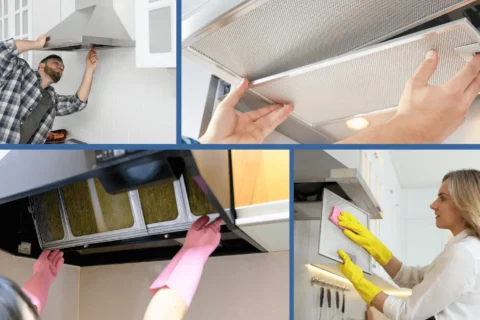
Your kitchen is more than a cooking space; it is the pulse of your home or business. It’s where we tell stories, pass down traditions, indulge in the smell of something delicious, and feel at home. But I’ve got to be real: When was the last time you looked up at your kitchen exhaust hood and considered cleaning it?
That simple-looking metal box above your stove does more than you might think. And in this guide, we’re going to have a real conversation about kitchen exhaust hood cleaning—why it matters, how to do it properly, and the little things that make a big difference. We’ll go beyond the usual tips and touch on what most other blogs skip.
Why Is Kitchen Exhaust Hood Cleaning Important?
The kitchen hood exhaust is vital to your kitchen, as it is mandatory for a healthy and safe environment. It eliminates grease, smoke, steam, odors, pollution, and other health risks. Yet ignoring kitchen exhaust hood cleaning can cause big problems:
- Fire Hazards: Increased grease accumulation in exhaust hoods and ducts can lead to highly flammable conditions over time. Research has shown that one of the main causes of restaurant fires is dirty kitchen exhaust systems, so it’s worth your time making sure it’s well-maintained.
- Reduced Energy Efficiency: A dirty exhaust hood fan has to work harder and will use more energy. This waste represents a boost in utility bills as well.
| 🔥 Fire Risk – Grease buildup is flammable 🌫️ Bad Air – Poor ventilation lowers air quality 💸 Higher Bills – Greasy fans work harder ❌ Failed Inspections – Surprise visits could cost you 🚫 No Insurance Payouts – No record = no help after fire |
- Foul Odors and Poor Air Quality: A greasy hood captures grease and smells, which impact the air you and your staff breathe.
- Health Code Violations: Restaurants with greasy exhaust systems can be slapped with failed health inspections and heavy fines. Your restaurant kitchen exhaust hood cleaning is not only best practice but is the law!
Let’s Talk About What It Really Means
When we say kitchen exhaust hood cleaning, we’re not just talking about a once-over with a rag. It means getting into the guts of the system—filters, ducts, fans, and all. Real cleaning removes hidden grease deposits that you can’t see but could cost you everything.
If you’re in a commercial setting, don’t stop until your service provider hands you a kitchen exhaust hood cleaning certification. That’s your proof to inspectors and insurers that you’ve done things right.
How to Clean a Kitchen Exhaust Hood
Though it may seem like a complex task, you can clean your exhaust hood effectively by following a careful process. Here’s how to approach it step by step:
Preparation
- Gather necessary supplies such as degreasers, sponges, gloves, microfiber cloths, and scrubbing brushes.
- Protect your kitchen surfaces by placing a drop cloth or plastic sheet under the exhaust hood.
- Wear safety gear, especially if working with harsh cleaners.
Step-by-Step: Cleaning That Makes a Difference
Here’s a guide to cleaning kitchen exhaust hood systems the way professionals do it.
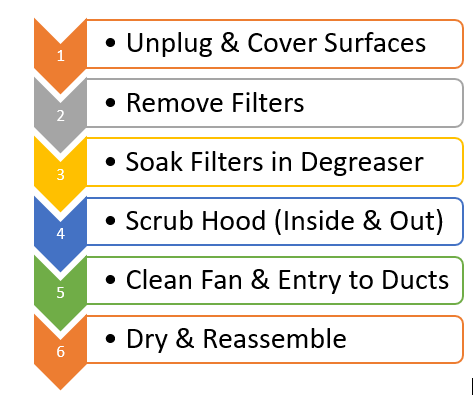
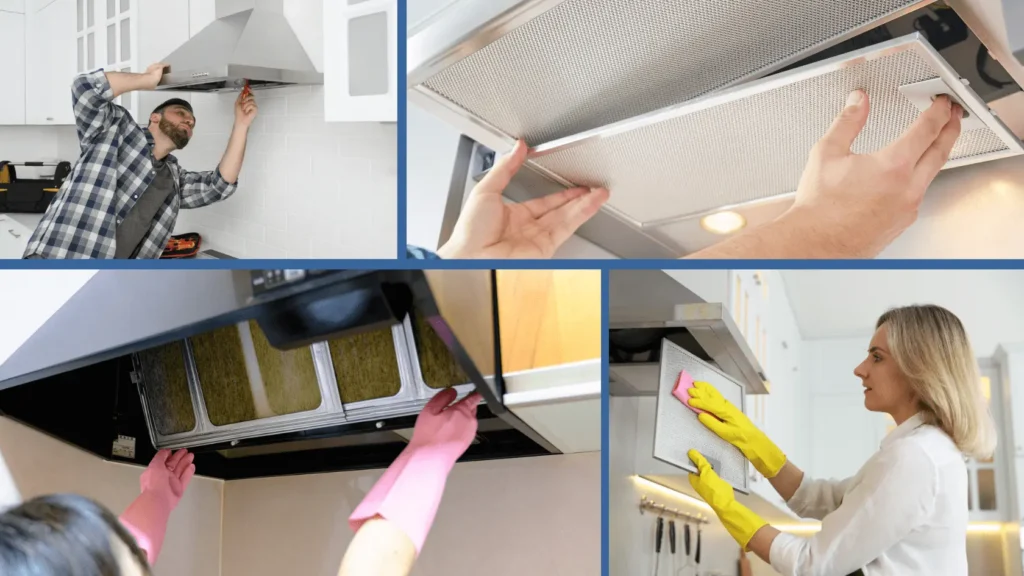
Step 1: Disconnect and Protect
Unplug the system and cover the surrounding areas to catch drips. In a restaurant, this might mean prepping the whole line.
Step 2: Remove Filters
Pull out metal grease filters. They’re often sticky, so gloves help.
Step 3: Degrease Filters
Soak them in hot, soapy water with a degreaser. Use a soft brush to get into the mesh.
Step 4: Scrub the Hood Inside and Out
Using a food-safe degreaser and a soft scrub pad, wipe down the inside and outside of the hood.
Step 5: Clean the Fan Blades and Duct Entry
If you can reach them safely, remove grease from the fan and the entrance to the ductwork. For most duct cleaning, you’ll want a pro.
Step 6: Rinse, Dry, and Reassemble
Let everything dry completely before you put the filters back. Moisture left behind can lead to corrosion.
When to Call the Professionals
For commercial kitchens or when dealing with heavy grease buildup, hiring a professional service for restaurant kitchen exhaust hood cleaning is often the best choice. Professionals bring specialized tools and expertise to ensure thorough kitchen deep cleaning results.
What the Pros Bring to the Table
Let’s break down the difference between doing it yourself and hiring a service.
| DIY | Pro |
| ✅ Cheap | ✅ Full system clean (ducts + fans) |
| ✅ Good for monthly filter rinses | ✅ Kitchen exhaust hood cleaning certification |
| ❌ Can’t reach deep ducts | ✅ Meets fire code |
| ❌ No certification | ❌ More expensive upfront |
1. Do-It-Yourself (DIY)
Pros:
- You’ll save some money
- Good for monthly maintenance
- Great learning experience if you like hands-on tasks
Cons:
- Can’t reach deep into the ducts
- No kitchen exhaust hood cleaning certification
- Might miss grease buildup that’s not visible
2. Professional Services:
Pros:
- They clean top to bottom—inside ducts and fans too
- Certified and insured
- They follow safety protocols and know what inspectors look for
Cons:
- Costs more upfront
- Requires scheduling
For a home kitchen, combining both methods can work well. Deep clean with a pro once or twice a year, then handle regular upkeep yourself. For restaurants, there’s no shortcut—restaurant kitchen exhaust hood cleaning needs to be done professionally and documented.
Kitchen Exhaust Hood Cleaning Costs
Cleaning costs can vary depending on usage, grease buildup, and whether you choose DIY or professional services.
- Home Kitchens
DIY cleaning supplies might cost $20–$50. For professional services, expect to pay $100–$300 per session.
- Commercial Kitchens
The cost for restaurant kitchen exhaust hood cleaning typically ranges from $500 to $2,000, depending on the hood size, amount of grease, and frequency of services.
To save money, consider obtaining multiple quotes and staying consistent with routine cleanings to avoid escalating grease issues.
A Cleaner Kitchen Is a Happier Kitchen
Let’s step away from dollars and ducts for a second. A clean kitchen just feels better. The air is lighter. The space feels cared for. And if you believe in energy—call it spirit, call it intention—a clean kitchen carries that energy through your food and into your life.
In many homes, kitchens are treated with deep respect. They’re not just places to cook; they’re places of ceremony and community. Keeping them clean, including the not-so-obvious places like cleaning kitchen exhaust hood, honors the people who gather there.
How to Keep Things Fresh Between Deep Cleans
You don’t need to deep clean every week, but you should follow a few easy habits. Here’s how to keep a kitchen clean day by day:
- Wipe down the hood’s exterior after cooking anything greasy
- Remove and rinse filters every month
- Use less oil when you can
- Include hood checks in your kitchen deep cleaning checklist
These simple steps will reduce buildup and make the next cleaning kitchen exhaust hood easier and cheaper.
What Others Won’t Tell You
We’ve read the other blogs. They give you the same recycled tips. Here’s what’s often missing:
Fire Insurance Claims
Did you know your insurance might not pay out for a fire if there’s no record of regular kitchen exhaust hood cleaning? That’s why the kitchen exhaust hood cleaning certification matters.
Inspections Aren’t Scheduled
Health and fire inspections often happen without warning. If your system is dirty, it could shut your business down on the spot. Having a professional cleaning on file protects you.
Clean Hoods Mean Lower Utility Bills
A clean exhaust system moves air more efficiently. Your fan works less, saving energy. Over time, that adds up.
Mental Health Boost
This one’s personal. When your kitchen feels fresh, you cook with more joy. There’s something comforting about knowing every corner, even the hood, is clean.
Choosing the Right Cleaning Service
Ask around. Get referrals. Read reviews. And when you talk to a cleaning company, ask these questions:
- Do you serve homes and restaurants?
- What does your service include?
- Do you provide a kitchen exhaust hood cleaning certification?
- Can you share before-and-after photos?
- Are your technicians trained and insured?
A good cleaner won’t just give you a quote—they’ll explain their process.
The Checklist That Saves the Day
If you don’t already have one, create a kitchen deep cleaning checklist. Include tasks like:
- Filter cleaning
- Hood exterior wipe-downs
- Monthly fan checks
- Biannual professional hood cleaning
Stick it inside a cabinet or pantry door where it’s easy to see. And yes—check things off. It’s satisfying and motivating.
Final Thoughts
Kitchen exhaust hood cleaning isn’t glamorous, but it’s a silent hero in your daily life. It protects your home, your business, your health, and maybe even your peace of mind. Regular upkeep, whether it’s DIY or pro service, keeps things flowing smoothly.
So next time you fire up the stove, give a little nod to the hood above. Keep it clean, keep it safe, and treat your kitchen with the care it deserves.
FAQs
Q: How often should I clean my kitchen exhaust hood?
A: For homes, deep cleaning every 6–12 months. Restaurants need it monthly or quarterly, depending on cooking volume.
Q: What’s included in professional cleaning?
A: Full kitchen hood exhaust cleaning—hood, filters, ducts, fans—and a kitchen exhaust hood cleaning certification.
Q: Is it okay to clean it myself?
A: Sure, for surface-level maintenance. But deep duct cleaning and certification must come from professionals.
Q: Why is it crucial for restaurants?
A: It’s part of staying compliant and keeping your restaurant clean. It also protects against fires and keeps the air quality healthy.
Q: What’s the usual kitchen exhaust hood cleaning cost?
A: Around $100–$250 for homes, and $300–$1,500 for restaurants, depending on setup.
Take care of your kitchen, and it will take care of you. Whether you’re running a home kitchen or a full-scale restaurant, a clean exhaust hood is one of the best investments you can make. Now, go ahead. Add that task to your to-do list—and maybe even light a candle tonight in your fresh, clean kitchen